What is a gunite pool, and why do we build them?
We often get asked why some swimming pools last for generations while others need constant, expensive repairs. The answer usually comes down to the incredible strength and design freedom of gunite.
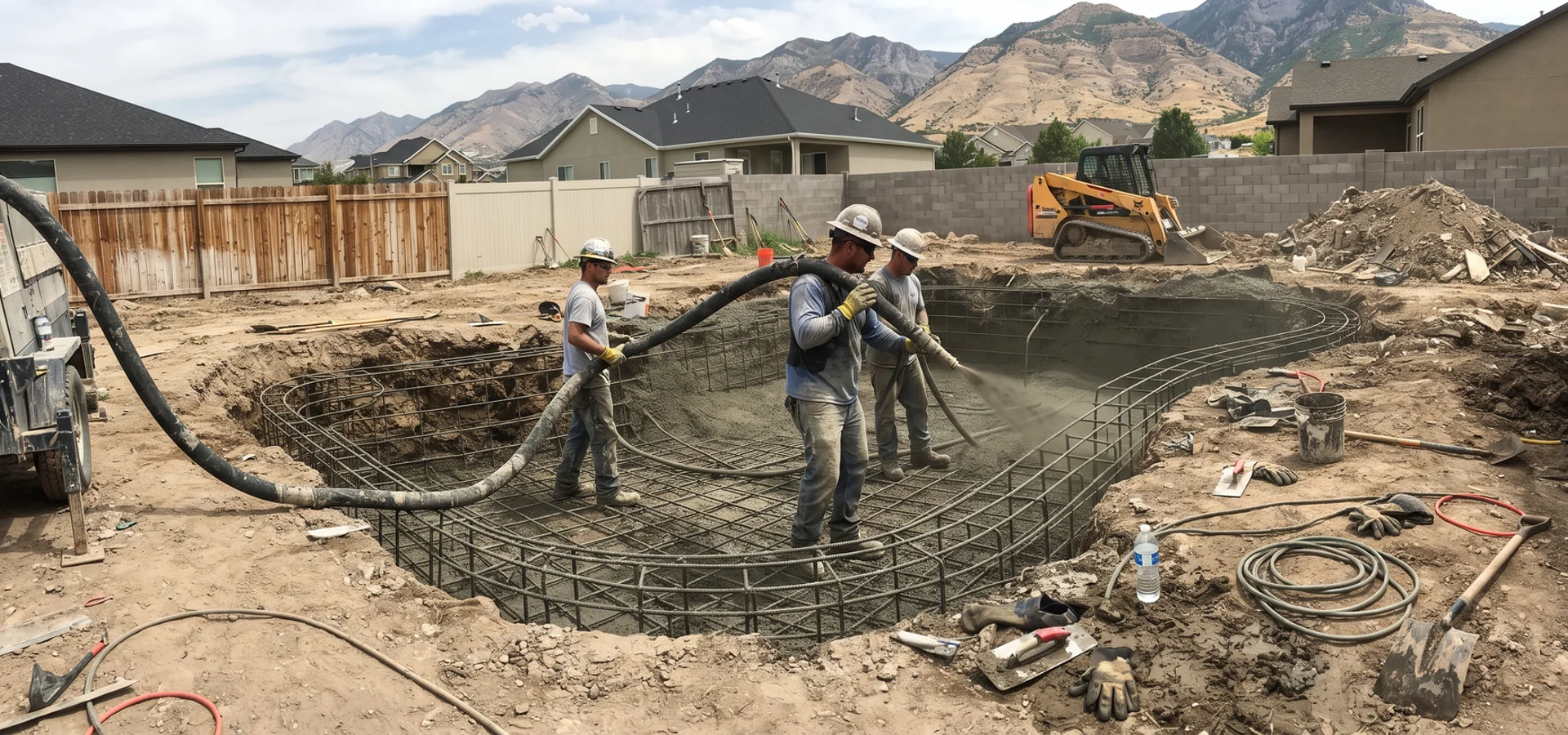
As custom pool builders in Utah, we apply concrete pneumatically over a tied steel rebar grid to form a single solid pool shell. There is no pre-made mold involved in this process.
“Our favorite thing about gunite is that it creates a permanent structure built to last 50 years or more.”
The excavation team digs the exact shape you designed for your yard. We install the steel to follow that shape, and the concrete simply follows the steel.
This method ensures the final product perfectly matches your property and your budget.
Our customized approach lets you actually use the water exactly the way you planned:
- A relaxing tanning ledge at the sun end.
- A custom bench where the adults can sit.
- A deep end sized specifically for the way your kids swim.
A highly popular option is an attached spa that shares a wall with the main pool. We want you to know that none of those are options you pick from a basic catalog.
These features are just simple design decisions made during the planning phase. We focus heavily on creating a properly reinforced and cured concrete shell that is rigid and repairable.
Interior finishes like plaster usually wear out every 10 to 15 years, requiring a simple resurfacing. We love that the concrete structure underneath does not need to be replaced alongside the plaster.
This rigidity protects your huge investment during harsh winter freeze cycles. We are always honest about the tradeoff, as gunite takes longer to build and costs more than dropping in a manufactured shell.
The fastest, cheapest water in the ground will require a different building method entirely. We highly recommend gunite if your priority is a custom pool you intend to keep for the next two decades.
How the shell actually gets built
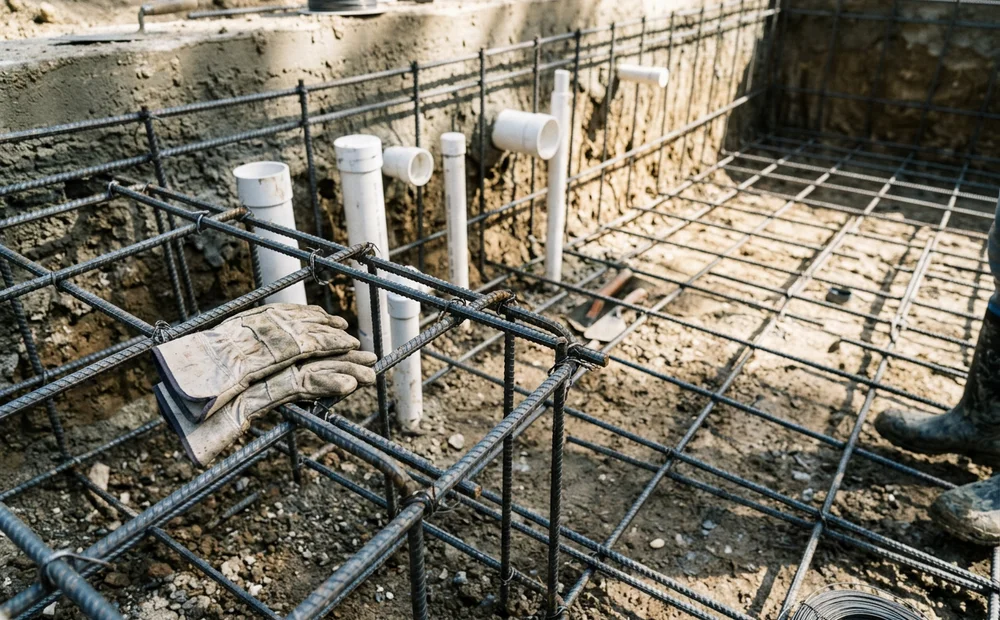
We begin by benching the hole after excavation so the sidewalls hold their exact shape. Plumbing is then stubbed through the walls and floor before any steel goes in.
Our standard practice involves using #3 and #4 steel rebar at engineered spacing. The grid is tied tightly to follow every single curve, step, and bench in the design.
We always schedule a thorough structural inspection before the concrete phase begins. Gunite uses a dry concrete mix that combines with water right at the nozzle, while shotcrete arrives completely wet.
Our experienced nozzle operators use this pneumatic application to pack the material tightly against the steel. Workers then cut and shape the workable material perfectly by hand.
“We consider proper curing to be the single most important step for achieving a watertight, crack-resistant concrete shell.”
The true final strength of your pool depends entirely on this drying phase. We follow the American Shotcrete Association recommendation of a full 28-day curing period to reach a compressive strength of 4,000 PSI or better.
The shell must be kept moist during this critical window. Our specific instructions outline exactly how this curing phase unfolds:
- Days 1 to 7: Misting the concrete with water two to three times daily to prevent shrinkage cracks.
- Days 8 to 14: The continuation of a chemical process called hydration to build internal strength.
- Day 28: Reaching the designed 4,000 PSI compressive strength.
A hydrostatic relief valve sits in the floor to manage natural groundwater pressure. We use this small valve to allow pressure to equalize under the shell rather than pushing up and cracking the structure.
The final construction steps include adding your chosen coping, waterline tile, decking, and equipment. Our finishing touch is the plaster bond coat, followed by a standard plaster or a premium pebble aggregate finish like PebbleTec.
Common problems we solve
“My lot is too sloped for a pool”
We view yard slope as a straightforward cost and engineering question rather than a dealbreaker. Bench and hillside lots along the Wasatch Front routinely get swimming pools every single year.
Our designs for these properties often include structural retaining walls, expanded excavation, and heavy material hauling. A steep slope also requires a specialized French drain system engineered right behind the wall to manage water runoff.
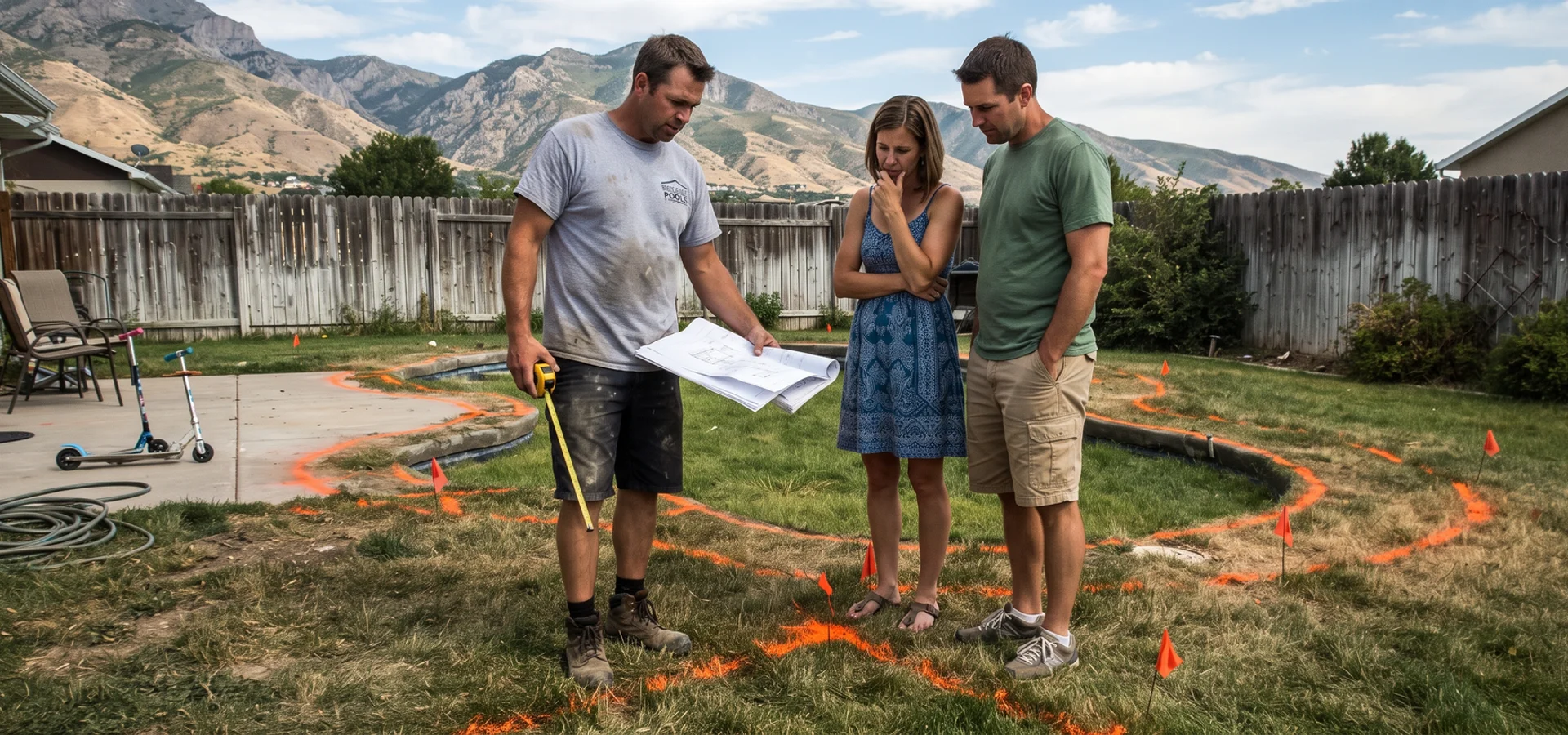
We calculate all of these site-specific requirements during the initial consultation. Real numbers give you a clear picture of what the extra engineering adds before you commit to a final design.
“Nobody will tell me what this actually costs”
We hate seeing low advertised starting prices used as a deceptive marketing tactic. Those low numbers typically describe a bare concrete shell with no decking, no drainage, and a long list of expensive exclusions.
Our quotes include the entire scope of work required to actually finish the backyard. A fully completed custom gunite pool project in Utah realistically starts much higher once you factor in landscaping restoration and electrical runs.
We provide a realistic, comprehensive price range very early in the process. Transparent pricing based on your specific property allows you to make decisions with actual, dependable numbers.
“Every contractor blames someone else”
We know that excavation, structure, plumbing, electrical, decking, drainage, and landscaping touch each other constantly. Managing five separate subcontractor schedules is exactly where delays and miscommunications live.
Our team performs the excavation, grading, drainage, and landscaping directly. Keeping all of these crucial seams inside one single project eliminates the finger-pointing.
We take full responsibility for the timeline from the first dig to the final plant installation. A single point of contact makes the entire construction phase vastly less stressful for you.
“The last yard I saw looked unfinished”
We regularly hear horror stories about contractors handing over a finished pool shell surrounded by a giant mud pit. This frustrating situation happens when the initial quote only ever covered the water feature itself.
Our proposals always scope the decking, grading, drainage, and planting right alongside the pool construction. Installing a clean cantilevered concrete deck and drought-tolerant plants ensures the space is immediately usable.
We want your backyard to look completely finished and pristine the day the crew leaves. A holistic approach transforms a raw construction site into a proper outdoor living space.
Cost guide: what moves the number
We often explain that two gunite pools of the exact same surface area can differ in price by tens of thousands of dollars. The major variables that move the needle the most in Utah are entirely dependent on site conditions and premium upgrades:
- Excavation difficulty: Hitting rock, dealing with expansive clay soil, and trucking material off the site rather than redistributing it locally.
- Access constraints: Working in a narrow side yard dictates smaller machinery, which increases the total days required for the dig.
- Depth and shape: Engineering deeper and more complex freeform shells requires substantially more steel, concrete, and skilled hand shaping.
- Attached spa features: Integrating a spa requires additional structural engineering, separate plumbing lines, an independent heater, and smart automation.
- Automatic safety covers: Adding an automatic cover in 2026 typically costs between $15,000 and $22,000 for standard shapes.
- Equipment and automation: Upgrading to variable-speed pumps, smart lighting, and salt water sanitization systems impacts the final budget.
- Decking and coping: Pouring expansive concrete patios or installing premium stone coping is usually the largest line item after the shell.
- Drainage, grading, and restoration: Performing the real, necessary site restoration work that cheap quotes conveniently leave out.
We built a quick reference table to help you understand which upgrades impact your budget the most. The following comparison highlights the scale of these financial variables.
| Upgrade / Variable | Typical Cost Impact | Why It Matters |
|---|---|---|
| Automatic Pool Cover | $15,000 - $22,000 | Excellent for heat retention, evaporation control, and child safety. |
| Attached Spa | High | Requires separate heating, plumbing, and additional structural steel. |
| Complex Excavation | Moderate to High | Rock breaking and hauling fees add up quickly on steep slopes. |
| Premium Decking | High | Large patios easily become the second largest expense on the project. |
We strongly encourage you to review the exact details of any proposal before signing a contract. For a fuller breakdown of these numbers, read our Utah pool cost guide, and check what a complete quote should include before comparing bids.
When to start planning
We always advise homeowners that pool construction in Utah is highly seasonal. Ground work gets strictly limited by frozen winter soil, causing the spring and summer schedules to fill up incredibly fast.
Our advice is to start the initial consultation and design conversations in the fall or early winter if you want to swim by next summer. Municipal permit approvals alone can take four to eight weeks to process during peak demand periods.
We use a specific timeline to ensure everything stays on track:
- Fall: Initial site evaluation and design planning.
- Winter: Finalizing engineering and submitting for municipal permits.
- Spring: Breaking ground and curing the gunite shell.
Planning early leaves plenty of room for thoughtful design decisions without rushing choices you will live with for the next 20 years.
We look forward to helping you design the perfect backyard retreat. Give the team a call today to schedule your initial site evaluation.